
Is Rust Check Environmentally Friendly? What Canadian Drivers Should Know
Rust is one of the most predictable forms of vehicle deterioration in Canada. It is also one of the least well understood. Many drivers know rust is “bad,” but fewer understand how it starts, how it spreads, or how different rust protection methods affect both the vehicle and the environment.
In recent years, questions have expanded beyond performance alone. Canadian drivers increasingly want to know whether rust proofing treatments-particularly oil-based systems like Rust Check-are environmentally responsible, safe for long-term use, and appropriate for modern vehicles.
This article examines rust proofing from a practical and environmental perspective. It explains how rust forms in Canadian conditions, how rust control methods differ, and where Rust Check fits within those methods-without sales language or assumptions.
Table of Content
- Key Takeaways
- Why Rust Is Structurally Significant in Canadian Vehicles
- Defining the Terms: Rust Proofing, Rust Control, and Rust Protection
- How Rust Check Fits into Modern Rust Protection
- Environmental Impact: How Should Rust Proofing Be Evaluated?
- Oil-Based Rust Control vs Other Methods
- Is Rust Check Environmentally Friendly in Practical Terms?
- Safety Considerations: People, Property, and Vehicles
- Timing and Frequency of Rust Protection in Canada
- Common Misunderstandings About Rust Protection
- Frequently Asked Questions
- Conclusion: A Practical View of Rust Protection in Canada
Key Takeaways
- Rust in Canada is primarily caused by salt, moisture, and temperature cycling
- Rust proofing methods differ significantly in how they interact with moisture
- Oil-based rust control focuses on prevention and containment, not concealment
- Environmental impact should be assessed over a vehicle’s full lifecycle
- Improper rust protection can accelerate corrosion rather than stop it
- Annual rust protection is common in Ontario due to sustained salt exposure
- No rust treatment is chemical-free, but not all methods carry the same risks
Why Rust Is Structurally Significant in Canadian Vehicles
Salt Is Not the Only Problem
Road salt is often cited as the primary cause of vehicle rust, but salt alone does not corrode metal. Rust occurs when iron, oxygen, and moisture interact. Salt acts as a catalyst by accelerating the electrochemical reaction.
Canada’s climate creates ideal conditions for this process:
- Prolonged winter moisture
- Repeated freeze-thaw cycles
- Salt residue remaining active even after snow melts
- Water intrusion into seams, welds, and enclosed cavities
This combination makes corrosion not just likely, but inevitable without intervention.
Rust Is a Progressive Failure, not a Cosmetic Issue
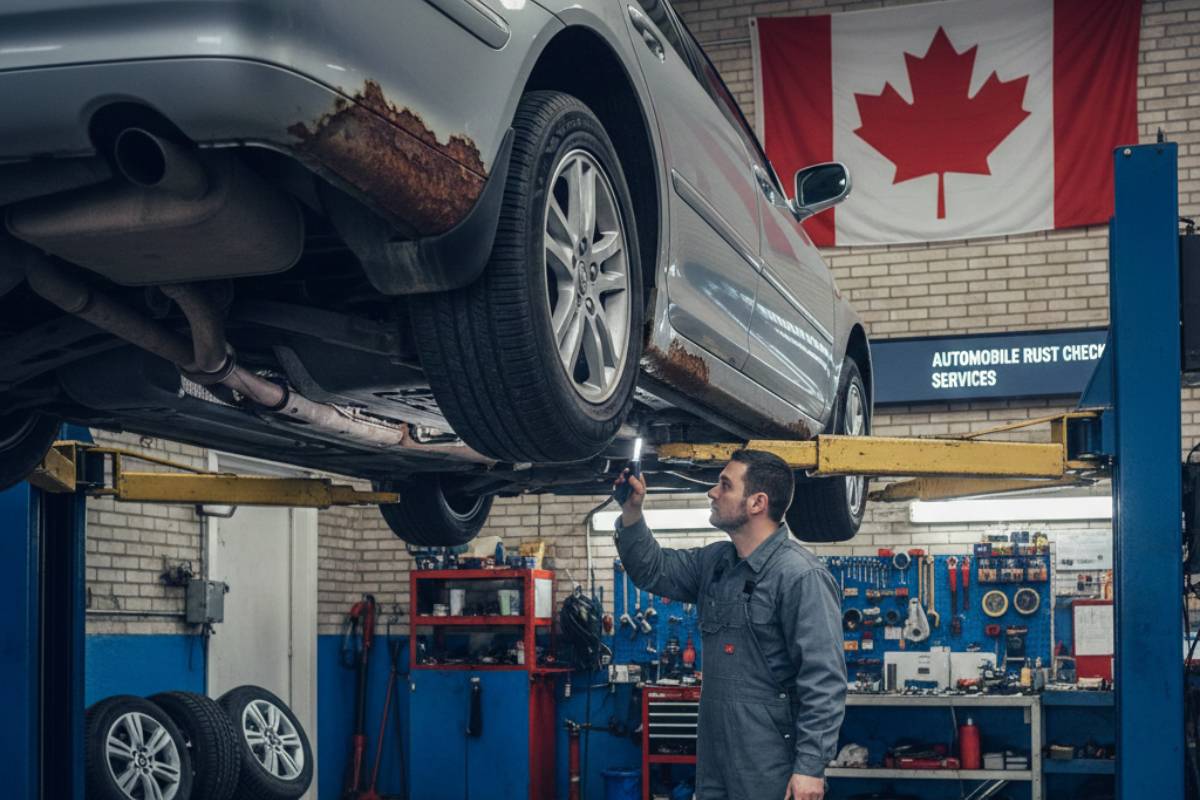
Rust often begins in places drivers cannot see:
- Inside doors and rocker panels
- Along brake and fuel lines
- Around suspension mounting points
- Within seams and folded metal joints
By the time rust is visible externally, internal degradation may already compromise safety, structural integrity, or repairability.
Defining the Terms: Rust Proofing, Rust Control, and Rust Protection
These terms are frequently used interchangeably, but they describe different strategies.
Rust Proofing
Rust proofing refers to preventative measures applied before corrosion begins. The goal is to inhibit the conditions required for oxidation by:
- Displacing moisture
- Limiting oxygen exposure
- Coating vulnerable surfaces
This approach is most effective on newer vehicles or those with minimal corrosion.
Rust Control
Rust control addresses existing corrosion. It does not reverse rust but aims to:
- Slow or halt progression
- Prevent rust from spreading to adjacent areas
- Reduce ongoing moisture retention
Oil-based systems are commonly used for rust control because they can penetrate porous rust layers.
Rust Protection
Rust protection is the broader category that includes:
In Canadian climates, rust protection is not typically a one-time process.
How Rust Check Fits into Modern Rust Protection
Oil-Based, Penetrating Protection
Rust Check is classified as an oil-based rust control system. Unlike hard coatings, it is designed to remain fluid enough to migrate into seams and enclosed spaces.
This characteristic is central to how it functions:
- It displaces moisture rather than sealing it in
- It does not harden or crack over time
- It can reach areas inaccessible to surface coatings
This approach is consistent with rust prevention practices used in industrial and marine environments, where moisture entrapment is a known failure point.
Environmental Impact: How Should Rust Proofing Be Evaluated?
The Question Is Not “Chemical vs non-chemical”
All effective rust protection involves chemicals. The relevant question is how those chemicals behave over time and what they prevent.
Environmental assessment should consider:
- Volume used
- Frequency of application
- Longevity of vehicle life extended
- Risk of secondary damage
Vehicle Longevity as an Environmental Metric
Manufacturing a new vehicle carries a substantial environmental cost, including:
Extending the usable life of an existing vehicle reduces demand for replacement. From a lifecycle perspective, preventing rust-related scrappage can offset the environmental cost of periodic rust protection treatments.
Oil-Based Rust Control vs Other Methods
Rubberized and Asphalt-Based Coatings
These products form a hard barrier over metal surfaces. While initially protective, they present several risks:
- Cracking due to temperature changes
- Moisture trapped beneath the coating
- Hidden corrosion that progresses undetected
Once compromised, these coatings can accelerate rust rather than prevent it.
Wax-Based Treatments
Wax coatings offer cleaner application and less runoff but typically:
- Provide limited penetration
- Dry out over time
- Require more frequent reapplication
Their effectiveness in high-salt Canadian conditions is variable.
Electronic Rust Inhibitors
Electronic modules claim to alter corrosion processes electrically. Independent testing has shown inconsistent results, particularly in salt-heavy environments where moisture control is the dominant factor.
Is Rust Check Environmentally Friendly in Practical Terms?
Relative, Not Absolute
Rust Check is not environmentally neutral. However, when compared to alternatives that trap moisture or require heavy reapplication, it presents lower long-term risk when applied correctly.
Key considerations include:
- Targeted application rather than blanket coating
- Lower likelihood of corrosion acceleration
- Reduced need for rust-related part replacement
Environmental impact should be measured in outcomes, not marketing labels.
Safety Considerations: People, Property, and Vehicles
Post-Application Runoff
Temporary dripping after treatment is normal and reflects excess material draining from access points. Most installers recommend:
- Parking on absorbent surfaces briefly
- Allowing time for settling before washing
Once stabilized, the product remains largely contained within body panels.
Odour and Exposure
Oil-based rust protection may produce a mild smell shortly after application. This dissipates as volatile components evaporate. Under normal use conditions, exposure levels are considered low and temporary.
Compatibility With Modern Vehicles
When applied properly, rust control treatments do not interfere with:
- Airbags
- Sensors
- Electric or hybrid systems
Professional application is essential to avoid inappropriate placement near sensitive components.
Timing and Frequency of Rust Protection in Canada
New Vehicles
Applying rust proofing early prevents corrosion from establishing itself in seams and joints. This is the most effective stage for preventative protection.
Used Vehicles
Vehicles with early rust can still benefit from rust control. Slowing progression can extend usability and reduce repair frequency.
Reapplication Cycles
Annual treatment is common in Ontario and other salt-heavy regions. This reflects environmental exposure rather than product failure.
- The Complete Guide to Rust Protection Aerosols: Keep Your Vehicle Safe from Corrosion in Canada
- Rust Check vs. Dealer Packages: Which Is Better Value?
- Rust Control Maintenance Tips: How to Extend the Life of Your Rust Protection?
- Rust Proofing Near Me: Why Rust Check Is Canada’s Trusted Choice
Common Misunderstandings About Rust Protection
- “Factory coatings are enough”
Factory protection is designed for general conditions, not sustained salt exposure. - “If I don’t see rust, I don’t have rust”
Corrosion often begins internally. - “One treatment lasts forever”
Environmental exposure degrades all protective systems over time.
Looking for reliable rust protection in Ontario without the dealership gimmicks? RustCheck makes it simple. Protect your car with a treatment that’s trusted by Canadian drivers.
Frequently Asked Questions
- Is Rust Check environmentally friendly compared to other rust proofing methods?
Rust Check avoids hard coatings that trap moisture and cause hidden corrosion. Its main environmental benefit is extending vehicle lifespan, which reduces manufacturing waste and replacements. While not chemical-free, its preventative approach has a lower long-term impact than invasive coatings.
- Does rust proofing prevent rust or just slow it down?
Rust proofing prevents corrosion on clean metal. Once rust starts, it works as rust control by slowing further damage. Early application is key in Canadian climates.
- Is oil-based rust control safe for long-term vehicle use?
Yes. Oil-based rust control has been safely used for decades. When applied correctly and reapplied as recommended, it does not damage metal, wiring, or structural components.
- Why do some rust proofing treatments make rust worse?
Some coatings trap moisture once they crack, accelerating hidden corrosion. Effective rust protection displaces moisture rather than sealing it in.
- How often should rust protection be reapplied in Canada?
Annual application is recommended for most vehicles. Road salt, moisture, and temperature changes gradually reduce protection, especially in Ontario.
- Is rust proofing necessary for leased or newer vehicles?
Yes. Rust affects all vehicles. Preventative rust protection helps avoid structural damage and potential end-of-lease corrosion penalties.
- Does rust protection affect resale value?
Yes. Proper rust protection helps preserve structural integrity and reduces visible corrosion, which can improve resale value in rust-prone regions like Canada.
Conclusion: A Practical View of Rust Protection in Canada
Rust protection is not about making a vehicle “immune” to corrosion. It is about managing risk in a climate where rust is unavoidable without intervention.
From an environmental standpoint, the most responsible rust control strategy is one that:
- Prevents premature vehicle disposal
- Avoids trapping moisture
- Minimizes unnecessary material use
Oil-based rust control systems like Rust Check are widely used because they align with these principles when applied correctly.
For Canadian drivers-especially those in Ontario-rust protection is not an optional add-on. It is a form of long-term maintenance that balances vehicle longevity, safety, and environmental responsibility.
If you are evaluating rust protection options, focus less on labels and more on how the method works, how it interacts with moisture, and what it prevents over time.
Why Drivers Across Canada Rely on RustCheck.ca for Year-Round Rust Protection
For more than 50 years, RustCheck.ca has helped drivers across Canada defend their vehicles against rust, road salt, and harsh winter conditions. From everyday commuters to commercial fleets, our rust protection and rust control solutions are designed to extend vehicle lifespan, preserve resale value, and reduce long-term corrosion damage.
Our Services Include:
- Rust Check Body Panel Protection – A proven liquid rust inhibitor trusted by Canadians since 1973.
- Coat & Protect Undercarriage Treatment – Advanced corrosion protection for exposed underbody components.
- Two-Step Rust Check Application – Targeted treatments tailored to different vehicle areas and risk levels.
- Fleet, Truck & Trailer Rust Control Programs – Practical, cost-effective solutions for commercial and government vehicles.
- New Vehicle Rust Protection – Preventative treatments that stop corrosion before it starts.
- Specialty Vehicle Programs – Protection for ambulances, cranes, and heavy-duty equipment.
- Seasonal Vehicle Care Guidance – Expert advice, articles, and videos to help manage rust year-round.
With a nationwide dealer network, finding a Rust Check location anywhere in Canada is simple. Whether you’re protecting a personal vehicle, maintaining a work fleet, or safeguarding a new investment, RustCheck.ca offers the experience, technology, and reach to help you stay ahead of rust-wherever the road takes you.